

D Size Alkaline Battery (LR20): A Buyer’s Guide for UAE Industrial Teams
In this article
- What Is a D Size Alkaline Battery (LR20) and How Should UAE Industrial Teams Buy It?
- What Is a D Size Alkaline Battery?
- How Much Power Does a D Cell Really Deliver?
- Why Does UAE Heat Change How You Buy and Store D Cells?
- Which D Cell Specs Matter for Marine and Shipping Crews?
- For vessel and port purchasing:
- What Do Cleaning and Hygiene Companies Need From D Cells?
- Should You Choose Alkaline, Lithium or Rechargeable D Cells?
- How Should You Buy D Size Alkaline Batteries in Bulk?
What Is a D Size Alkaline Battery (LR20) and How Should UAE Industrial Teams Buy It?
A dead torch on a night shift is a small failure with big consequences. On a vessel, in a plant room or on a cleaning contract, the cheapest part of the kit often decides whether the job runs on time. For a lot of heavy-duty torches, lanterns, radios, gas detectors and dispensers, that part is the D cell.
Yet most purchase orders treat D batteries as a commodity line item. That's a mistake, especially in the UAE, where heat, humidity and bulk storage change how long a cell actually lasts.
This guide covers what a D size alkaline battery really is, what its published capacity means in practice, and how to buy and store it if you run a technical maintenance, hygiene, industrial, marine or shipping operation.
Key Takeaways
- A D size alkaline cell (IEC code LR20) delivers 1.5V and roughly 15,000-17,000 mAh at light loads, but only about 4,500 mAh at a 1A drain (ANSMANN datasheet).
- Heat is the real UAE risk: storage above 30°C cuts shelf life, and high temperatures raise leakage risk (Energizer).
- Buy by load, storage conditions and batch date, not by price per cell alone.
What Is a D Size Alkaline Battery?
A D size alkaline battery is a 1.5V non-rechargeable cell measuring 34.2 mm in diameter and 61.5 mm in height, according to the Duracell MN1300 listing, published as an IEC/ANSI standard size. Its IEC code is LR20, its ANSI code is 13A (some brands print "D"), and it's sometimes called "Mono." It weighs about 139 g.
Those codes matter when you're ordering for a mixed fleet of equipment. A supplier who hears "D battery" and sends a zinc-carbon R20 instead of an alkaline LR20 hasn't made a clerical error so much as a performance one. Both fit the same compartment. They don't behave the same under load.
Chemistry is zinc and manganese dioxide with an alkaline (potassium hydroxide) electrolyte. A new cell reads roughly 1.58-1.68V open circuit before settling to its 1.5V nominal rating, per the ANSMANN LR20 datasheet.
How Much Power Does a D Cell Really Deliver?
In 2026, manufacturer datasheets still list D cells at 15,000-18,000 mAh, but those figures come from light, slow discharge tests. An ANSMANN datasheet rates one D cell at 16,000 mAh at 25 mA, but only 4,500 mAh when drained at 1,000 mA. Load decides everything.
Here's the practical reading. A cell that looks like "16 Ah" on the label behaves like a 4.5 Ah cell inside a high-output work lamp. If your team compares quotes by the mAh figure on the pack, you're comparing test conditions, not real run time.
For low-drain devices such as sensor dispensers or radios on standby, the headline numbers are much closer to reality. A Procell PC1300 sheet distributed for flushometer applications lists nominal capacity at 15,476 mAh under a light continuous load.
Rule of thumb: match the cell to the drain. Heavy-duty torches and lanterns need a cell that holds up at high current. Dispensers and sensors need a cell that holds its charge for years.
Why Does UAE Heat Change How You Buy and Store D Cells?
On August 5, 2026, the UAE recorded a high of 51.2°C in Al Dhafra, according to the National Centre of Meteorology as reported by Khaleej Times. Meanwhile, Energizer advises storing alkaline cells at 20-25°C. A warehouse, container or vehicle in the UAE summer can sit far above that.
Energizer's alkaline FAQ puts shelf life at 5-7 years and notes that storing batteries at higher temperatures shortens it. Its non-rechargeable FAQ adds that leakage risk climbs under extended high temperature, deep discharge, or mixing old and new cells, and that leaked electrolyte is caustic.
A widely used rule of thumb says self-discharge roughly doubles for every 10°C rise (see the Battery Life and How To Improve It reference). Applied to storage, it looks like this:
The takeaway for procurement teams: where the cells sit before they reach the job matters as much as the brand. A pallet left in an un-cooled container in July can lose a large share of its shelf life before anyone opens it.
What to do about it:
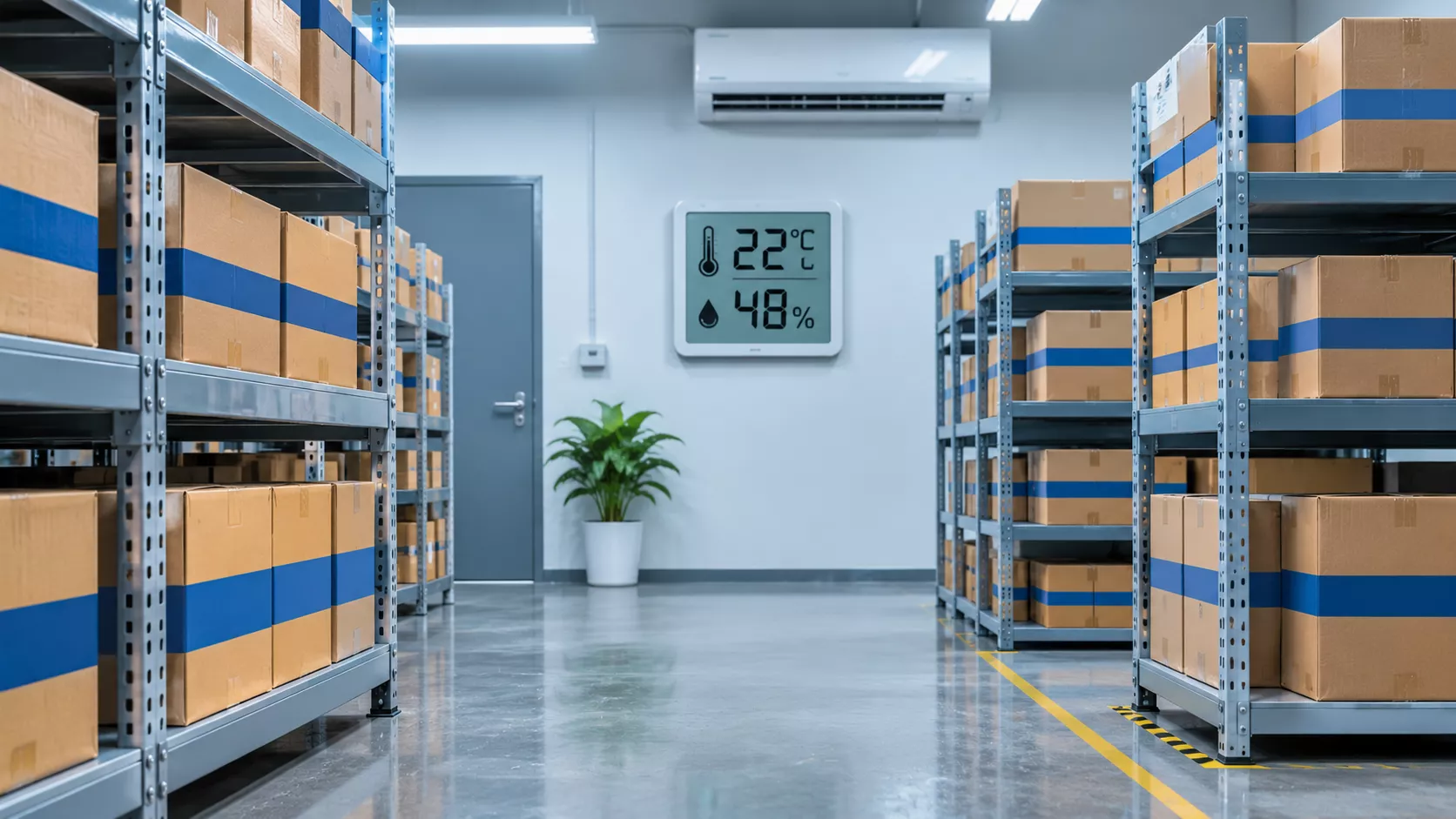
- Store D cells in an air-conditioned room, ideally at 20-25°C and 35-65% humidity, as Energizer recommends.
- Don't keep spare cells in vehicles or on open deck lockers through summer.
- Skip the refrigerator. Energizer warns that cold storage can cause condensation and corrosion.
- Rotate stock first-in, first-out, and check the date code on every delivery.
Which D Cell Specs Matter for Marine and Shipping Crews?
For marine and shipping crews, the spec that matters most is a cell rated for -20°C to 60°C operation with a stated shelf life, such as the Varta industrial D cell, listed at 17 Ah and a 10-year coded shelf life. Those figures give a margin for hot decks and long voyages.
Ships, ports and offshore sites add one more rule: some equipment is only certified with specific cells. Manuals for ATEX and intrinsically safe torches say to use only the battery types they list. Unilite's ATEX torch manual warns against changing batteries in hazardous locations, and the Nightstick manual warns against mixing new and used cells.
Those quoted manuals cover AA and AAA models, so read the manual for your own D-cell equipment. The principle holds, though: certified safety depends on the exact approved cell and on swapping batteries in a non-hazardous area.
For vessel and port purchasing:
- Check the equipment certificate or manual for approved battery types before ordering.
- Replace all cells in a device at the same time, same brand and same batch.
- Keep a sealed, labelled spare set per critical torch or radio.
- Take spent cells ashore for proper disposal rather than binning them on board.
What Do Cleaning and Hygiene Companies Need From D Cells?
Hygiene contractors rarely think about batteries until a dispenser fails. Touch-free soap, sanitiser and paper dispensers, flush sensors and portable cleaning equipment often run on D cells because they need long, low-drain life. In that role, shelf life and leak resistance matter more than peak power.
A 15,476 mAh nominal cell running a sensor that draws a few milliamps can last a long time in theory. In practice, a leaking cell can destroy the dispenser, and the repair costs more than the batteries ever did. Energizer's FAQ is blunt that leakage is caustic and risk rises with heat and with mixed or deeply discharged cells.
So for facilities and cleaning teams, a good maintenance routine saves more money than a cheaper cell:
- Replace every cell in a dispenser together, never one at a time.
- Remove cells from equipment that will sit unused for weeks.
- Log battery change dates on a route sheet so the oldest sites get serviced first.
- Wear gloves when handling any cell that looks wet or crusty.
Should You Choose Alkaline, Lithium or Rechargeable D Cells?
For most torches, dispensers and standby equipment, alkaline is the practical default. Energizer's FAQ gives cylindrical alkaline a 5-10 year shelf life and cylindrical lithium 10-15 years at room temperature. Lithium costs more, so it earns its place only where cells sit unattended for a decade.
| Factor | Alkaline D (LR20) | Lithium Cylindrical | Rechargeable |
|---|---|---|---|
| Typical Shelf Life at Room Temperature | 5–10 years | 10–15 years | Depends on chemistry and charge state |
| Best For | Torches, radios, dispensers, and sensors | Long-life and hard-to-reach devices | Daily-use equipment with charging routines |
| Upfront Cost | Lowest | Highest | Medium, plus charger cost |
| Watch out for | Heat and leakage | Higher purchase cost | Check that the device is rated for rechargeable batteries |
Don't put alkaline cells in a charger. The Wikipedia alkaline battery entry cites a UK consumer test where alkaline cells in "recharging" devices fell to around 10% of original capacity after two cycles. Check your equipment manual before swapping chemistry, especially for certified safety gear.
How Should You Buy D Size Alkaline Batteries in Bulk?
A good bulk order starts from the application, not the price list. IEC 60086 is the international standard that D cells are built and tested to, as noted on a typical LR20 datasheet, so ask any supplier to confirm compliance and to give you the discharge test conditions behind every mAh figure.
Bulk-buying checklist for UAE operations:
- Size code: confirm LR20 alkaline, not zinc-carbon R20.
- Load profile: tell the supplier whether you need high-drain or low-drain performance.
- Date code: ask for the manufacture date and plan around a 5-10 year shelf life.
- Storage plan: make sure the delivery goes to an air-conditioned store.
- Packaging: specify shrink packs or cartons that suit your site handling.
- Quantity and repeat orders: agree a reorder pattern so you never run down to the last box.
Francell holds local stock in Sharjah and supplies alkaline AA, AAA, C and D cells to retail and wholesale customers, including corporate and facilities teams across the UAE. Send your quantity, delivery location and application and the team will confirm availability and pricing for your D cells, or message them on WhatsApp at +971 50 696 0867 for urgent orders. Request a D size alkaline battery quote.
Frequently Asked Questions
Is a D size battery the same as LR20?
Yes. LR20 is the IEC code for the alkaline D cell, while 13A is the ANSI code. All describe a 1.5V cell about 34.2 mm wide and 61.5 mm tall, per the Duracell MN1300 listing. Confirm "alkaline" when ordering, since zinc-carbon D cells share the same size but perform differently.
How long does a D alkaline battery last in storage?
Energizer's FAQ states that alkaline cells keep a shelf life of 5-10 years at around 21°C, and that higher temperatures shorten it. In the UAE, that means a cool, air-conditioned store matters more than the printed date alone, since a 50°C vehicle can quickly erode storage life.
Can I mix old and new D batteries in a torch?
No. Energizer's FAQ lists mixing fresh and used cells, mixing chemistries and extended high temperature among the factors that raise leakage risk, and warns that the leaked electrolyte is caustic. Replace every cell in a device together, same brand and same batch.
What is the capacity of a D size alkaline battery?
Published figures run from about 15,000 to 18,000 mAh at light loads, for example 17 Ah on the Varta listing. Under a heavy 1A drain, one ANSMANN datasheet shows only 4,500 mAh. Always compare cells at the load your device actually draws.
Conclusion
A D size alkaline battery is simple on paper and surprisingly easy to get wrong in practice. To recap:
- LR20 alkaline cells deliver 1.5V, but real capacity depends on the load.
- UAE heat shortens shelf life and raises leakage risk, so storage is part of the purchase decision.
- Marine, industrial and hazardous-area gear may only be approved with specific cells.
- Hygiene and facilities teams save the most by standardising change routines.
If you're planning a bulk order for your fleet, plant or cleaning contracts, talk to Francell's team in Sharjah about D size alkaline stock and repeat supply. You can also explore Francell's AA alkaline battery guide and battery solutions guide for related battery information.
Need D size alkaline batteries in bulk?
Tell us your quantity, application and delivery emirate. Our Sharjah team will confirm stock and wholesale pricing for D size alkaline (LR20) batteries.
Need batteries in bulk?
Francell supplies retail and wholesale customers across the UAE.