18650 Battery Wholesale Sharjah: The Complete 2026 B2B Buying Guide
What Every Bulk Buyer Sourcing 18650 Battery Wholesale in Sharjah Should Check First
Ordering 18650 cells by the pallet is nothing like buying a two-pack off a shelf. Get the chemistry, capacity claim, or import paperwork wrong, and a single container can turn into a customs hold or a warehouse full of stock nobody can legally sell. If you're buying 18650 battery wholesale in Sharjah for flashlights, power tools, e-bikes, or backup power kits, this guide covers exactly what to verify before you place a purchase order.
Key Takeaways
- Genuine 18650 cells top out around 3,600mAh in 2026 anything advertised above that from an unverified supplier is almost certainly mislabeled or rewrapped.
- Every lithium-ion shipment into the UAE is classified as Class 9 dangerous goods and needs UN38.3 test documentation before it clears customs.
- Chemistry (NMC, LFP, LCO) matters more than the mAh number printed on the wrapper it decides safety margin, cycle life, and which application the cell actually suits.
- Sharjah's free-zone logistics network makes it one of the most practical regional bases for holding and re-exporting compliant 18650 battery stock across the GCC.
What Exactly Is an 18650 Battery, and Why Does the Name Matter?
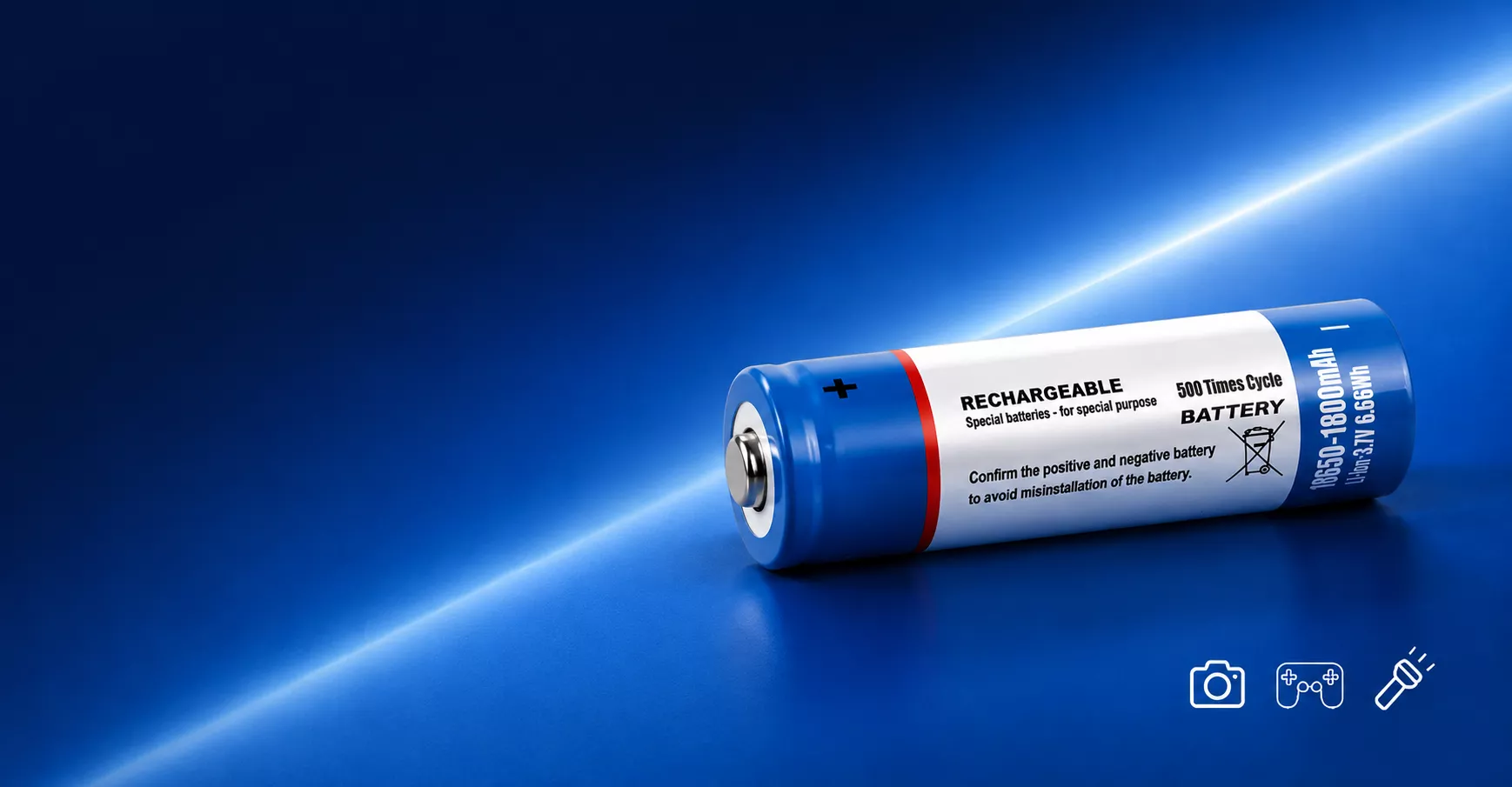
An 18650 cell is 18mm in diameter and 65mm long the number is a size code, not a brand or a chemistry. First developed by Sony in 1991, the format became the default cylindrical lithium-ion cell for laptops, power tools, e-bikes, flashlights, and early EV battery packs, and remains the most widely produced lithium-ion cell size on the market today.
Because "18650" only describes the can, not what's inside it, two batteries with identical size and voltage ratings can behave completely differently under load. That's the detail wholesale buyers skip most often and the one that causes the most returns.
Nominal voltage sits at 3.6–3.7V per cell, charged to a peak of 4.2V. Common chemistries include:
- NMC / NCA highest energy density, standard for power tools and e-bikes.
- LCO highest capacity per cell (up to 3,600mAh), suited to low-drain devices like flashlights and laptops, but lower thermal stability.
- LFP lower nominal capacity, but longer cycle life and better heat tolerance, which matters for the UAE's ambient temperatures.
How Much Can You Actually Expect From a Bulk 18650 Wholesale Order?
As of 2026, the real ceiling for a mass-produced 18650 cell is roughly 3,600mAh listings claiming 4,000mAh, 5,000mAh, or higher are effectively guaranteed to be relabeled or counterfeit cells. That ceiling exists because the format's fixed 18mm x 65mm volume caps how much active material a cell can physically hold, regardless of what the wrapper says.
When comparing wholesale quotes for 18650 battery wholesale in Sharjah, treat any bid built around unverified 4,000mAh+ specs as a red flag rather than a bargain the gap between quoted and tested capacity is usually where margin disappears once customers start returning stock.
For most commercial buyers, the practical range worth stocking looks like this:
- 1,800–2,200mAh high-discharge cells for power tools and vaping-adjacent hardware needing strong current output.
- 2,600–3,000mAh the balanced middle ground most B2B buyers move the most volume in, covering flashlights, e-bikes, and general electronics.
- 3,000–3,600mAh genuine high-capacity cells for laptops, power banks, and long-runtime devices, priced at a premium and worth sourcing only from suppliers who can show test data.
What Import and Safety Compliance Rules Apply to Battery Wholesalers in the UAE?
Every lithium-ion shipment entering or moving within the UAE is treated as Class 9 dangerous goods, meaning packaging, labeling, and documentation requirements apply regardless of order size. In practice, that means UN38.3 test certification, a Material Safety Data Sheet, and a Dangerous Goods Declaration should accompany every wholesale consignment before it reaches a Sharjah warehouse.
The core documents to request from any 18650 battery wholesale supplier in Sharjah before signing a purchase order:
- UN38.3 test summary confirms the cells passed altitude, thermal, vibration, and short-circuit testing required for air and sea freight.
- MSDS (Material Safety Data Sheet) required by UAE customs and by any freight forwarder handling the shipment.
- Class 9 packaging and labeling batteries must ship in impact-resistant, short-circuit-proof packaging with hazard labeling intact.
Rechargeable lithium-ion cells also carry inherent handling risk: they may leak or ignite if crushed, disassembled, short-circuited, or exposed to heat exactly why customs authorities and freight carriers treat undocumented shipments so cautiously.
Why Source 18650 Battery Wholesale Through Sharjah Specifically?
Sharjah's free-zone infrastructure gives battery wholesalers a practical base for holding compliant stock and re-exporting across the wider GCC, which is part of why the emirate has built up a visible cluster of battery and electronics trading companies. Buyers in Dubai, Abu Dhabi, and neighboring Gulf markets frequently route bulk battery orders through Sharjah-based suppliers precisely because of that logistics positioning.
Rather than one region dominating, the honest picture is a still-developing market: the Middle East and Africa together hold only around 5% of the global lithium-ion battery market share today, with growth concentrated in renewable-energy storage and rising consumer electronics demand rather than any single product category. That's a market in build-out mode, not a mature one which is exactly why supplier vetting matters more here than in markets with decades of established distribution.
Worth asking before you commit to a supplier: if this market is still forming, who's actually going to answer the phone in eighteen months when you need a warranty claim resolved?
How Should You Vet a Wholesale 18650 Battery Supplier in Sharjah Before Ordering?
A supplier's catalog tells you what they sell; it doesn't tell you whether the batch in the container matches the spec sheet. Before placing a bulk order, run through this checklist:
- Ask for the UN38.3 report tied to the specific batch, not a generic certificate from a different production run.
- Request sample cells for independent capacity testing rather than trusting the printed mAh figure alone.
- Confirm built-in protection features anti-leak design and short-circuit/over-discharge protection are standard on quality cells and worth writing into the purchase spec.
- Check minimum order quantities against your storage and shelf-life plan lithium-ion cells degrade in storage, so overbuying ties up capital in stock that loses capacity before it sells.
- Verify local presence a Sharjah or UAE-based team that can hold stock and handle warranty claims locally beats a purely overseas supplier when something goes wrong.
Frequently Asked Questions
What's the maximum mAh I should trust on an 18650 battery in 2026?
Around 3,600mAh is the realistic ceiling for a genuine cell in 2026; capacities advertised above that from unverified sellers are typically inflated or mislabeled. Always ask for independent test data on any cell claiming near-maximum capacity before ordering in bulk.
Do 18650 batteries need special customs paperwork to import into the UAE?
Yes. Lithium-ion cells are classified as Class 9 dangerous goods, so shipments typically require UN38.3 test certification, an MSDS, and a Dangerous Goods Declaration before customs clearance. Confirm your supplier can provide these per batch, not just once at account setup.
What's the difference between NMC, LCO, and LFP 18650 cells for wholesale stocking?
NMC and NCA chemistries favor energy density for power tools and e-bikes, LCO delivers the highest raw capacity for low-drain devices like flashlights, and LFP trades some capacity for longer cycle life and better heat tolerance. The right mix depends on which end-use categories your customers buy for most.
Can I use a lower-capacity 18650 battery to replace a higher-capacity one?
Generally yes, as long as the voltage and physical dimensions match and the device doesn't demand a discharge current beyond what the replacement cell can safely deliver. Runtime will typically be shorter with a lower-mAh cell.
How many charge cycles should a quality 18650 battery handle before it degrades?
A reputable brand-name cell typically holds up for roughly 300–500 full charge cycles before capacity drops to about 80% of its original rating. Cycle life is one more reason to buy from suppliers who can back capacity claims with test data rather than wrapper text alone.
Buying 18650 Battery Wholesale in Sharjah: What to Do Next
Bulk 18650 sourcing comes down to three checks: does the capacity claim hold up under test, does the chemistry match your customers' actual use case, and does the paperwork clear UAE customs without delay. Skip any one of those and the cheapest quote on the table can become the most expensive mistake in the warehouse.
- Confirm UN38.3 and MSDS documentation before signing any purchase order.
- Match chemistry to application rather than chasing the highest printed mAh number.
- Favor a Sharjah-based or UAE-present supplier who can support warranty claims locally.
Request a wholesale quote